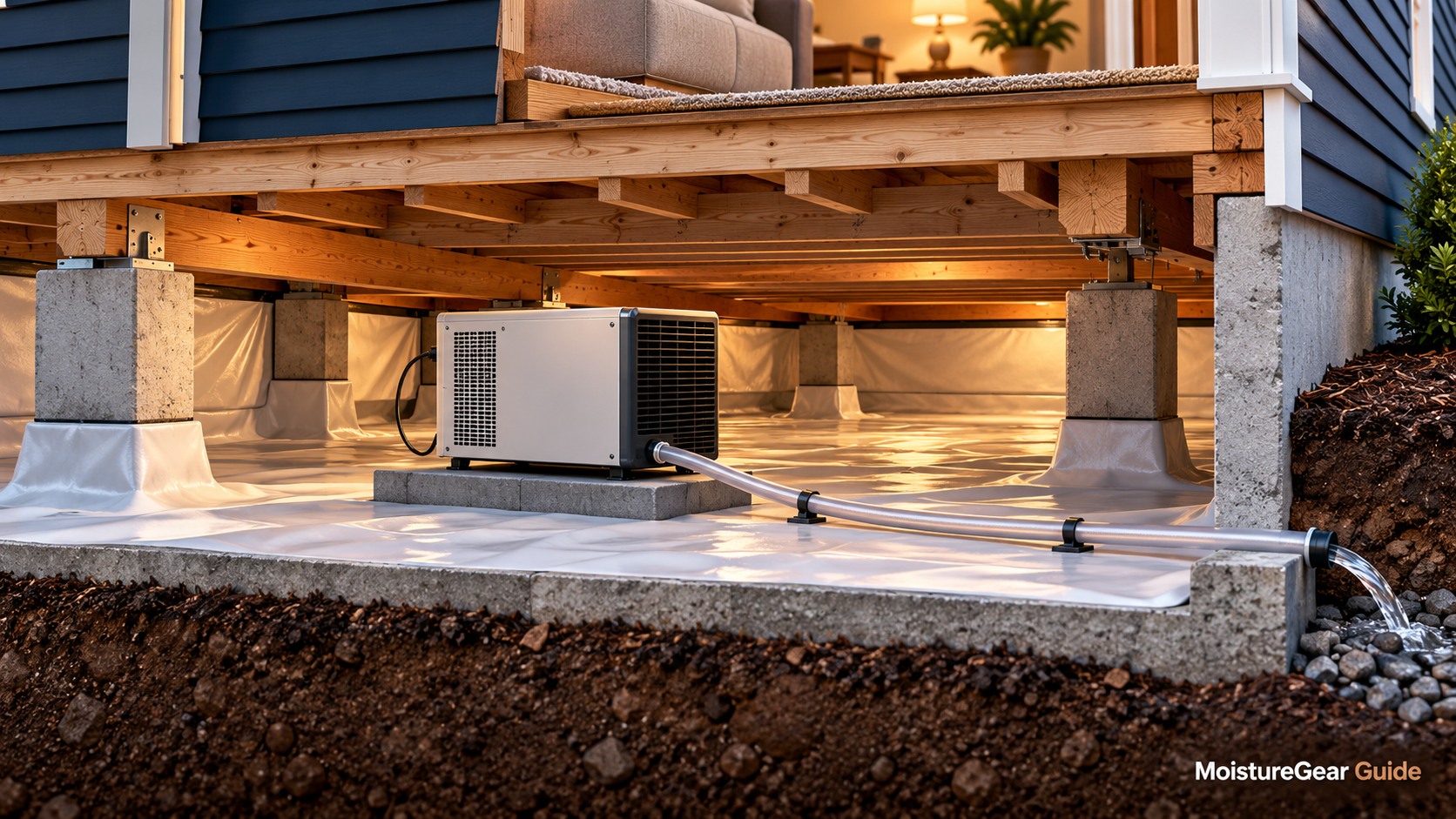
The best crawl space dehumidifier is the one that fits through your access opening, removes enough moisture under realistic conditions, and sends the collected water somewhere dependable. A high pint rating is useful only after those three requirements are satisfied. For many homes, a compact gravity-draining machine makes sense; others need an integrated pump, a better air-distribution plan, or a professionally installed system.
This guide compares specific equipment configurations and explains the decisions that determine whether they will suit your home. It favors clear installation requirements over headline coverage numbers. If you are still investigating dampness, start with our crawl-space dehumidifier hub and take measurements before ordering a machine.
How we selected these options: We reviewed manufacturer product pages, published specifications, and installation documentation available on October 13, 2026. These are research recommendations, not hands-on performance rankings. Capacity figures below use the stated test conditions; published specifications cannot establish actual drying time, reliability, or sound levels in your crawl space.
Our shortlist: choose by the installation problem
| Equipment | Published capacity at 80°F and 60% RH | Cabinet dimensions | Drainage arrangement | Most useful reason to consider it |
|---|---|---|---|---|
| AlorAir Sentinel HD55, blue gravity version | 53 pints/day | 19.2 L × 12.2 W × 13.3 H inches | Gravity | Compact cabinet where a dependable downhill drain is available |
| AlorAir Sentinel HDi65S, non-Wi-Fi version | 55 pints/day | 19.2 L × 12.2 W × 13.3 H inches | Integrated pump and gravity options | A smaller cabinet when the drain requires upward lift |
| AlorAir Sentinel HDi90, built-in-pump version | 90 pints/day | 23.2 L × 15.2 W × 17.7 H inches | Integrated pump | Greater published extraction capacity when access and service space allow |
| Santa Fe Compact70 | 70 pints/day | 21 D × 12 W × 12 H inches | Gravity; optional external pump kit | A low cabinet with a separate drainage accessory path |
Sources for the table are the HD55 manufacturer specification sheet, HDi65S product page, HDi90 product page, and Santa Fe product catalog. Dimensions describe the cabinet, not the complete installed envelope. Verify the exact generation and manual supplied with the unit.
The choices are deliberately different. The HDi90 has the highest stated extraction capacity in this group, but it is also taller and larger. The Compact70 is lower, but drainage and access can still make it unsuitable. The two smaller AlorAir cabinets offer contrasting drainage arrangements without requiring a substantially different cabinet footprint.

AlorAir Sentinel HD55: a compact gravity-drain option
The blue HD55 is worth considering when your crawl space is enclosed, the moisture load is within its capabilities, and water can drain downward continuously. Its case is modest enough to make access easier than with the HDi90. The attraction is the combination of a small footprint and a simple drainage approach rather than an assumption that every crawl space needs the biggest machine.
Be precise about the name. The current blue HD55 documentation gives 53 pints per day at 80°F and 60% relative humidity. The HD55S, HD55P, and Wi-Fi versions have separate documentation. A listing that says 113 pints is presenting a different rating condition, not promising that output in a cool, moderately humid crawl space. Our HD55 research review examines those distinctions.
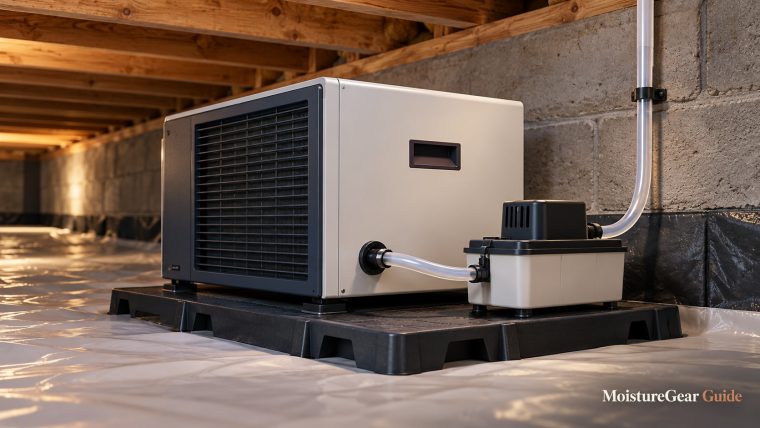
A gravity outlet is an advantage when the route is short, accessible, and genuinely downhill. It becomes a poor match when a hose has to rise over a foundation ledge or climb to a drain above the machine. Adding an external pump is possible only with a compatible installation plan; it also adds hardware, power requirements, and another item to inspect.
Consider the HD55 if simplicity and cabinet size are your priorities. Move to a pumped model if the drainage destination makes gravity impractical, and reassess the moisture source if a small unit would be expected to fight unrestricted outdoor air or active water entry.
AlorAir Sentinel HDi65S: pump convenience in a smaller cabinet
The non-Wi-Fi HDi65S deserves a place on the shortlist because drainage can be the deciding factor in a low crawl space. Its manufacturer page lists a pump configuration in the same cabinet dimensions as the blue HD55. That combination may solve a practical problem that a larger capacity figure does not: getting both the machine and its water outlet into a manageable installation.
Do not read the model suffix as a capacity specification. The current page lists 55 pints per day at 80°F and 60% RH. A buyer comparing the HD55 and HDi65S should evaluate the pump, controls, supplied fittings, and exact version rather than interpreting the names as a simple 55-versus-65 extraction comparison.
An integrated condensate pump still requires a suitable discharge route. Check the lift, total hose length, bends, tubing requirements, and any shutdown behavior in the matching manual. Advertised maximum lift is not a promise that every hose arrangement will work equally well. Keeping the pump outlet and its connections accessible is especially valuable where reaching the machine is difficult.
This is the option to investigate when compact fit and pumped drainage matter together. It is less compelling if gravity drainage is straightforward and the pump provides no useful benefit. Buyers who need app control must verify a Wi-Fi SKU separately; remote monitoring is not implied by the base model name.
AlorAir Sentinel HDi90: more capacity when the crawl space can accommodate it
The built-in-pump HDi90 offers a materially higher published extraction rating than the two smaller AlorAir options. That gives it a sensible role when an assessment points to greater ongoing moisture demand and there is enough room for the cabinet, airflow, and service. It should be considered for its combination of capacity and drainage, not because a larger number automatically makes it a better purchase.
A taller cabinet changes the installation. The usable height under a duct or beam may be much less than the general crawl-space height. There also needs to be a way to move the machine from the hatch to the chosen position without damaging the enclosure liner, pipes, or wiring. The HDi90 buying review covers the ownership questions in more detail.
The base built-in-pump model, the separately described ductable version, and the Wi-Fi version should not be treated as interchangeable bundles. A photograph with a duct collar or remote controller does not establish that the accessory is supplied. Ask for the exact model designation and parts list before making a comparison based on those features.
Choose this model for a documented need for more removal capacity with pumped drainage, provided it fits. If the crawl space remains wet despite adequate air drying, investigate the source rather than using the 90-pint rating as evidence that every underlying problem has been addressed.
Santa Fe Compact70: low height with an accessory-based drainage plan
The Compact70 is a useful alternative for buyers who need a low cabinet and want to evaluate a different product and service ecosystem. Its published 12-inch cabinet height is attractive in tight access conditions. The benefit is practical fit; you still need supports, drain configuration, filter access, and open space for air movement.
Santa Fe documents gravity drainage with an optional condensate pump kit. This arrangement can suit a straightforward downhill drain or an installation where the external pump can remain accessible. It does not mean a pump is inside every Compact70 package. The retailer's bundle description needs to identify the equipment and accessory combination explicitly.
Generation matters here as well. Current and older Compact70 literature may show different efficiency data, refrigerants, and cooler-temperature capacities. Use the exact part number and its manual when planning installation. The 2026 catalog's 70-pint figure at 80°F and 60% RH is suitable for the comparison above; a cooler-condition figure belongs in a separately labeled comparison.
The low cabinet may be attractive, but avoid buying it purely on height. A machine squeezed beneath a beam with no room to remove its filter is not a good installation. Our low-profile crawl-space guide explains how to measure the full route and installed space.
When a professional permanent system belongs on your shortlist
Some homes need more than a standalone cabinet placed under the floor. Multiple crawl-space sections, a difficult distribution layout, or a plan to serve adjacent conditioned space may justify a professional equipment assessment. AprilAire's E080 is one example of equipment marketed for sealed crawl spaces as well as other permanent applications; its official product page directs buyers to its professional network.
The important question is what the installed system will do. Ask the contractor to identify the area being controlled, the drainage arrangement, control location, access for service, and how performance will be checked afterward. A ducted system needs an air path that fits the equipment's allowed configuration; a few lengths of flexible duct do not prove the plan will work.
Compare an installed professional quote with an equipment-only purchase carefully. The quote may include supports, drainage work, controls, electrical preparation, and commissioning. It may also make warranty or service arrangements clearer. Our whole-house versus portable comparison helps separate these ownership approaches.
Determine whether a dehumidifier is the next step
A crawl-space appliance removes water vapor from air. It is not a substitute for managing liquid water. Before shopping, establish whether you are dealing with ordinary seasonal humidity, exposed soil, a torn ground cover, a plumbing leak, rainwater intrusion, or a combination.
The Building America guidance on crawl-space water management places bulk-water control before enclosure work. That is a useful order for a buying decision too. A moisture-control budget stretched between a larger machine and a necessary drainage repair should not automatically favor the machine.
If there is standing water, suspected sewage contamination, exposed wiring, or structural damage, arrange the appropriate assessment before working around the equipment. A dry reading beside a dehumidifier does not establish that damp materials elsewhere are clean or structurally sound. Keep the appliance decision separate from any required repair or remediation.
Once the sources have been addressed, a dehumidifier can be part of maintaining the crawl-space environment. The aim is a stable, monitored condition rather than a dramatic number on the first afternoon after installation.
Size for moisture demand, not a floor-area headline
Square footage is the start of a specification discussion, not the complete sizing method. Record the crawl-space footprint, approximate height, barriers between sections, temperature, humidity trends, enclosure condition, and known moisture sources. Those details explain why two crawl spaces with similar floor area may need different equipment or different air distribution.
Pint ratings also need context. ENERGY STAR’s testing explanation describes how portable-unit test temperatures affect the reported capacity. A 50-pint model tested under cooler conditions cannot be compared directly with a 53-pint model whose figure is measured at 80°F. Keep temperature and humidity beside each rating instead of sorting a product list by numbers alone.
Avoid inventing a pints-per-square-foot formula from a manufacturer's maximum coverage claim. That claim may assume conditions your home does not meet. If you need a defensible equipment recommendation, use the measured environment and the manufacturer's selection method, or have an installer assess it.
Our crawl-space dehumidifier sizing guide walks through the information to collect. It also explains why room divisions and cooler air can undermine an apparently adequate nominal capacity.
Measure access before comparing extras
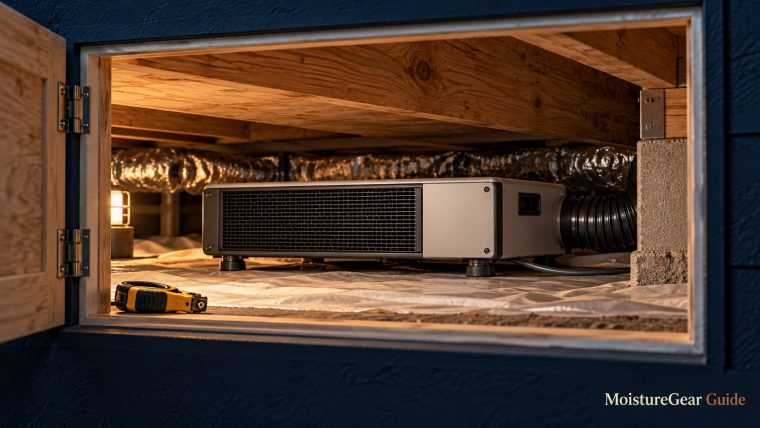
Measure the hatch opening, the clearance immediately behind it, the narrowest passage, and the final equipment position. A unit may fit through the opening but fail to turn past a foundation pier. Another may reach the position yet leave too little room for the drain connection or filter removal.
Include any support system in the installed height. A raised platform can improve the relationship between a gravity outlet and its drain, but it also uses vertical room. Hanging equipment requires an approved kit and appropriate supports; cabinet height alone says nothing about whether that approach suits the structure.
Think about removal as well as installation. Heavy equipment eventually needs service. The route should allow a person to work, inspect fittings, and move the unit without having to dismantle unrelated building systems. A smaller cabinet with manageable access can be the better long-term choice even when a larger machine has a more impressive headline capacity.
Decide on drainage before paying for a pump
Draw the route from the appliance to the approved discharge destination. For gravity drainage, identify whether the entire route can maintain the slope and configuration required by the unit's manual. For a pumped system, identify the vertical lift, hose length, restrictions, and access to inspect the outlet.
Do not assume that a nearby sump gives you a ready-made dehumidifier connection. The cover, entry point, discharge arrangement, and local requirements matter. Nor should you assume that pumping water outside is acceptable in every location or season. A drainage professional can resolve an uncertain termination before the equipment is ordered.
An integrated pump keeps the appliance and pump in one unit. An external pump separates those items and may offer a convenient service location. Gravity removes the pump from the plan where the site allows it. Each can be sensible; our gravity-drain versus pump guide compares the practical tradeoffs.
Budget for ownership instead of the box alone
The total purchase may include a support kit, compatible drain components, a pump, a remote control, a humidity monitor, and installation work. Add those items to both sides of a comparison. Otherwise, a low equipment price can appear better simply because essential accessories have been left out.
Running cost depends on actual power use and operating time. A larger unit may run for fewer hours in some conditions, but that does not establish universal savings. Use our electricity-cost guide to build a transparent estimate and revise it after you have real operating data.
Warranty length is also an incomplete comparison. Verify the seller, registration requirements, applicable purchase date, included parts and labor, freight responsibility, and who removes the machine for service. Keep the carton and purchase records if the warranty process calls for them. We explain those distinctions in the authorized-seller and warranty guide.
A good purchase is one that can be maintained and supported in your actual home. Neither a metal cabinet nor a long promotional warranty headline can establish that by itself.
How to check the installation after startup
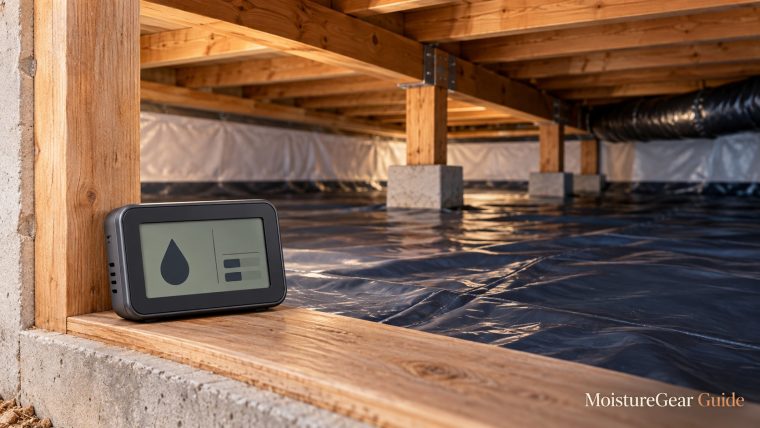
Use an independent humidity monitor away from the immediate dry-air discharge. Record readings in more than one part of the crawl space, particularly where foundation walls or ducts interrupt circulation. A favorable reading beside the unit is less informative if the far end remains damp.
Observe the drain during operation and inspect accessible fittings for leakage. Confirm that the machine responds to its control as described by the matching manual. Record the initial setting, local temperature, and weather so later changes have a useful reference point.
Do not respond to every small fluctuation by lowering the setpoint. Relative humidity changes with temperature, and control sensors do not necessarily read identically. Look for sustained patterns. Our crawl-space humidity guide explains how to interpret those readings and when a persistent change deserves investigation.
Arrange a follow-up inspection after representative wet weather. That is especially valuable when the installation accompanies ground-cover or drainage work. You are checking the combined moisture-control plan, not simply proving that the appliance fan turns on.
A useful worksheet to take shopping
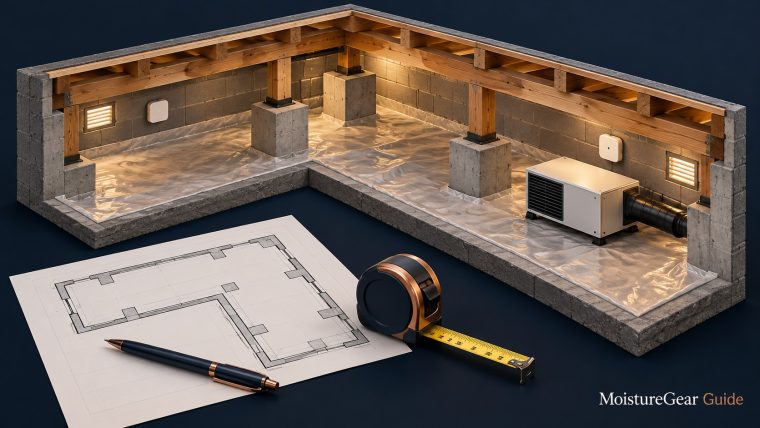
Put the practical requirements on one page before comparing listings. Include a sketch of the access route, the position of the proposed drain, a few dated humidity readings, and the accessories already included in an installer’s quote. Beside each candidate, write down whether the model can meet each requirement without an improvised workaround.
This turns the buying process into a comparison of complete arrangements. One seller may package an external pump and controller; another may sell only the cabinet. A third may offer a similar-looking Wi-Fi version whose manual describes different hardware. Comparing the assembled plans exposes those differences sooner than comparing the advertised pint numbers.
Keep a separate question list for the manufacturer or installer. Questions about a particular drain connection, controller, or restricted air path deserve a specific answer tied to the exact unit. Save that response with your purchase records so the final installation follows the same configuration you evaluated.
Which option would we investigate first?
For a compact enclosed crawl space with an accessible downhill drain, begin with the blue HD55 or Compact70 and check capacity against the measured conditions. When the same limited cabinet space must accommodate pumped drainage, investigate the HDi65S. When an assessment calls for greater extraction and the larger cabinet can be serviced comfortably, the built-in-pump HDi90 becomes a sensible candidate.
If air cannot reach separate sections, if the space is still receiving liquid water, or if the installation requires substantial ducting, resolve those conditions before choosing from the shortlist. The best result comes from matching equipment to a workable plan: moisture source, air path, drainage route, service access, and a way to verify the outcome.
Selected sources
- AlorAir Sentinel HD55 specification sheet
- AlorAir Sentinel HDi90 manufacturer product page
- Santa Fe current product catalog
- ENERGY STAR: Dehumidifier testing and capacity
- PNNL: Water management of existing crawl-space floors
About the author
Davis Murphy
Davis Murphy writes about dehumidifiers, indoor humidity, and home moisture control at MoistureGear Guide. His articles explain how to compare equipment, understand capacity ratings, and plan for drainage and maintenance. He focuses on clear, practical guidance to help readers choose a dehumidifier suited to their space and needs.