
Commercial dehumidification covers different jobs: ongoing control in a building, temporary construction drying, and water-damage restoration. Equipment selected for one task may be inconvenient or inappropriate for another.
LGR products are designed for useful extraction as air becomes drier, but capacity figures must still be compared under matching conditions. Transport, controls, pump requirements, cleaning access, and local service support also matter.
For water damage, a dehumidifier is part of a broader assessment and drying plan. The articles distinguish equipment selection from structural inspection, contamination assessment, and professional restoration.
Start with the commercial & restoration guide →
Buying guides and comparisons
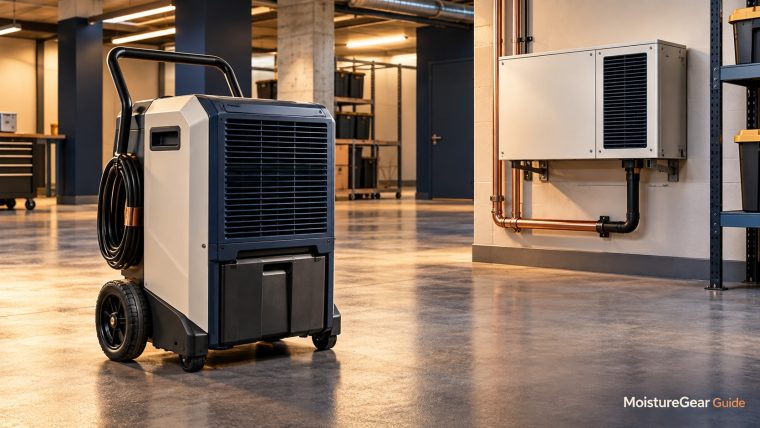
Best Commercial Dehumidifiers: Permanent Control and Jobsite Drying
Choose commercial drying equipment by the work it will do: permanent humidity control, repeated jobsite use, transport, and drainage matter as much as capacity.
Read the guide : Best Commercial Dehumidifiers: Permanent Control and Jobsite Drying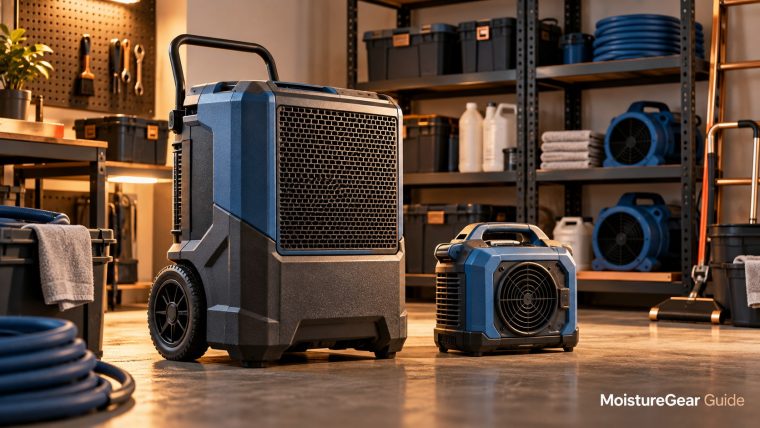
Best LGR Dehumidifiers: Capacity, Portability, and Service Costs
A focused LGR shortlist with matched capacity ratings, practical transport tradeoffs, and questions that reveal the total cost of professional drying equipment.
Read the guide : Best LGR Dehumidifiers: Capacity, Portability, and Service Costs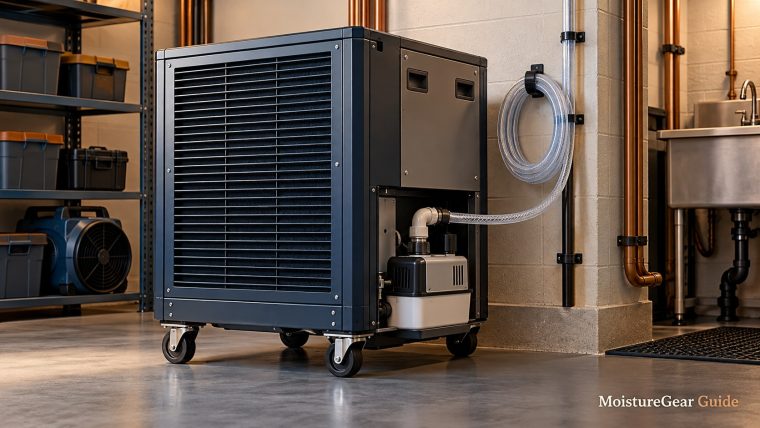
Best Commercial Dehumidifiers with a Pump
Compare pump-equipped commercial models by the drainage details that keep drying practical: lift, supplied hose, fault handling, destination, and service access.
Read the guide : Best Commercial Dehumidifiers with a Pump
Commercial vs Residential Dehumidifiers: Features That Justify the Cost
Professional equipment can justify its cost through drainage, handling, controls, and support. The commercial label alone does not establish better performance.
Read the guide : Commercial vs Residential Dehumidifiers: Features That Justify the Cost
LGR vs Conventional Refrigerant Dehumidifiers
LGR is a refrigeration design choice for useful extraction as air becomes drier. Learn when that matters and which buying claims need stronger evidence.
Read the guide : LGR vs Conventional Refrigerant Dehumidifiers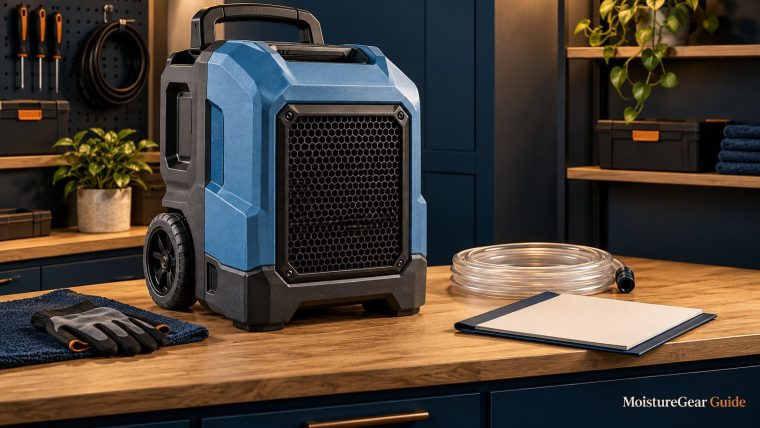
AlorAir Storm LGR Extreme Review: Published Specs, Pump, and Fit
A specification-based Storm LGR Extreme assessment covering the 85-pint AHAM rating, app and non-app versions, drainage planning, and purchase-specific checks.
Read the guide : AlorAir Storm LGR Extreme Review: Published Specs, Pump, and Fit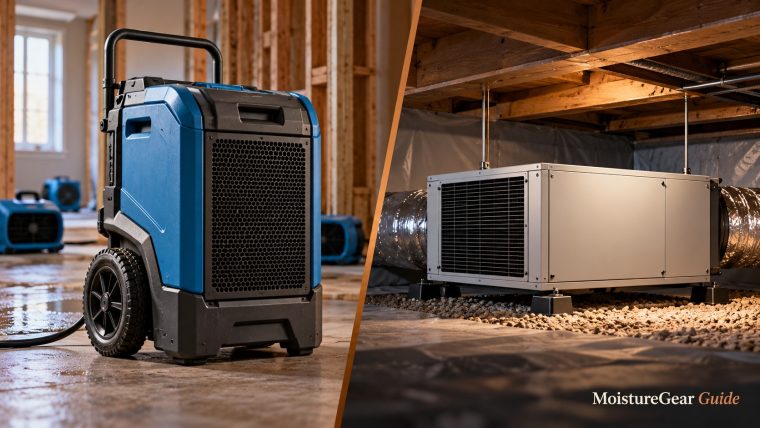
AlorAir Storm LGR Extreme vs Sentinel HDi90: Restoration or Permanent Control?
Storm and Sentinel serve different buying priorities. Compare their shared rating conditions, installed versus mobile roles, drainage, controls, and seller packages.
Read the guide : AlorAir Storm LGR Extreme vs Sentinel HDi90: Restoration or Permanent Control?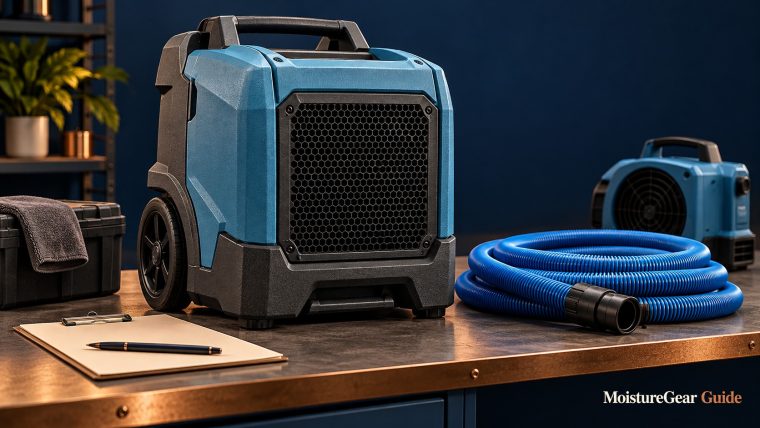
Dri-Eaz Revolution LGR Review: Current Model and Buying Considerations
A research review of Revolution LGR with particular attention to current Command Hub controls, older offers, matched capacity ratings, and purchase verification.
Read the guide : Dri-Eaz Revolution LGR Review: Current Model and Buying ConsiderationsPlanning and practical guides

Buy or Rent a Dehumidifier for Water Damage? Costs and Practical Limits
A practical buy-or-rent decision process with a transparent example calculation, rental questions, ownership responsibilities, and limits after water damage.
Read the guide : Buy or Rent a Dehumidifier for Water Damage? Costs and Practical Limits
How an LGR Dehumidifier Works
Follow the air and water through an LGR dehumidifier, understand grains and RH, and learn why equipment readings cannot certify dry building materials.
Read the guide : How an LGR Dehumidifier WorksConnect this topic to the rest of your setup
Equipment selection, drainage, monitoring, and ownership are linked decisions. Follow a related topic when it answers the next question in your plan.
Crawl space
Low-profile equipment, access, moisture loads, and drainage.
Explore the guidesBasement
Portable and permanent options for finished and unfinished rooms.
Explore the guidesWhole house
Capacity, ducting, installed costs, and model comparisons.
Explore the guidesCommercial & restoration
Commercial equipment, LGR technology, and jobsite requirements.
Explore the guidesSizing & ownership
Rating conditions, electricity costs, monitoring, and maintenance.
Explore the guides