
A basement can combine cold surfaces, summer humidity, room divisions, storage, and occupied living space. The right setup depends on those conditions and on the water route, not simply the advertised coverage area.
Portable appliances are useful in some rooms. Permanent low-profile equipment can make more sense when the moisture load, drainage route, or desired control requires it. The guides below explain both categories and their limitations.
Separate equipment choice from drainage planning. An integrated pump can help move water upward, but lift limits, tubing, receiving drains, and maintenance remain model-specific.
Start with the basement guide →
Buying guides and comparisons

Best Basement Dehumidifiers: Portable and Permanent Options
Compare portable and permanent basement dehumidifiers by the problems they solve, with practical guidance on capacity, temperature, drainage, and ownership costs.
Read the guide : Best Basement Dehumidifiers: Portable and Permanent Options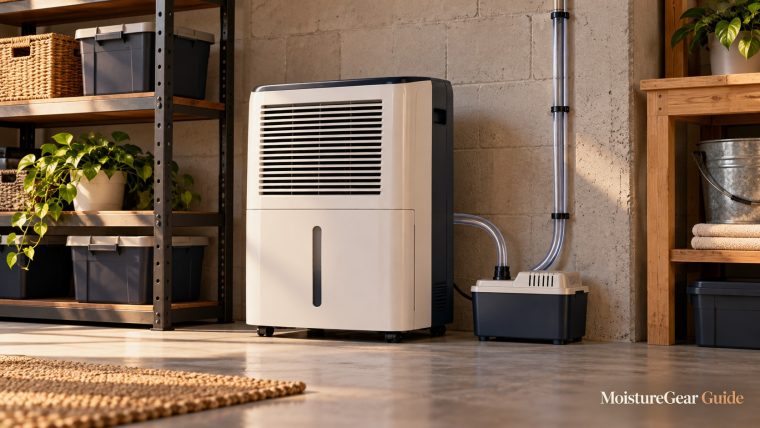
Best Basement Dehumidifiers with a Pump
Choose an integrated-pump dehumidifier around the water route, exact model, and maintenance routine. Compare four different portable and dedicated-equipment options.
Read the guide : Best Basement Dehumidifiers with a Pump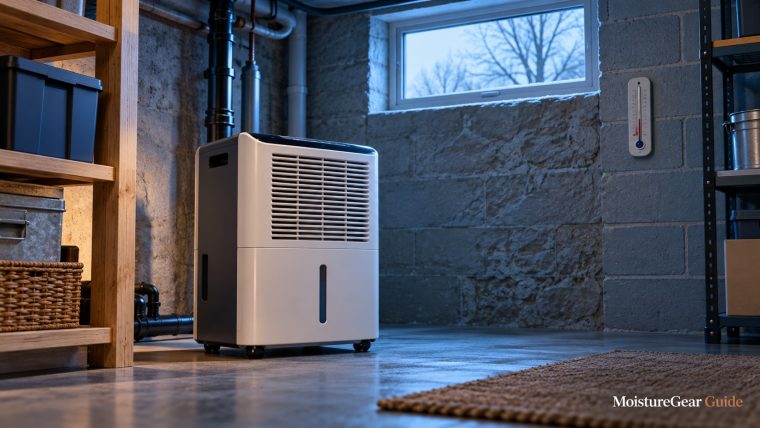
Best Dehumidifiers for a Cold Basement
Cold-operation limits and useful drying capacity are different. Compare suitable candidates and plan for temperature, condensation, and freeze-sensitive drainage.
Read the guide : Best Dehumidifiers for a Cold Basement
Quiet Basement Dehumidifiers: What Noise Specifications Can Tell You
Use sound specifications honestly, compare operating modes, and plan placement for a basement office, recreation room, or divided finished space.
Read the guide : Quiet Basement Dehumidifiers: What Noise Specifications Can Tell You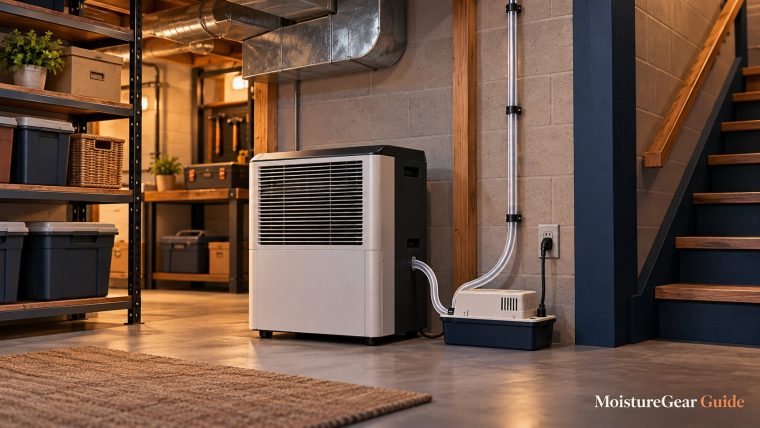
Dehumidifiers for Basements Without a Floor Drain
Begin with an acceptable water destination, then choose bucket collection, gravity drainage, an integrated pump, or a compatible external condensate system.
Read the guide : Dehumidifiers for Basements Without a Floor DrainPlanning and practical guides

Basement Dehumidifier Sizing: More Than Square Footage
Use a basement-specific worksheet to evaluate connected space, moisture patterns, temperature, drainage, and capacity before selecting equipment.
Read the guide : Basement Dehumidifier Sizing: More Than Square Footage
Where to Put a Dehumidifier in Your Basement
Coordinate the air path and drain route, follow exact-model clearances, and verify humidity in the rooms you expect the appliance to serve.
Read the guide : Where to Put a Dehumidifier in Your Basement
Finished vs Unfinished Basements: Choosing and Placing a Dehumidifier
Finishing changes air paths, sound expectations, and what moisture problems remain visible. Choose equipment around the room layout and building conditions.
Read the guide : Finished vs Unfinished Basements: Choosing and Placing a Dehumidifier
Why Your Basement Is Humid in Summer
Use weather, temperature, room readings, and the location of wetness to separate summer condensation from rainwater and indoor moisture sources.
Read the guide : Why Your Basement Is Humid in Summer
Basement Dehumidifier Running Constantly: What to Check
Separate fan operation from active drying, then check settings, temperature, moisture sources, circulation, drainage, and practical capacity before replacing equipment.
Read the guide : Basement Dehumidifier Running Constantly: What to CheckConnect this topic to the rest of your setup
Equipment selection, drainage, monitoring, and ownership are linked decisions. Follow a related topic when it answers the next question in your plan.
Crawl space
Low-profile equipment, access, moisture loads, and drainage.
Explore the guidesBasement
Portable and permanent options for finished and unfinished rooms.
Explore the guidesWhole house
Capacity, ducting, installed costs, and model comparisons.
Explore the guidesCommercial & restoration
Commercial equipment, LGR technology, and jobsite requirements.
Explore the guidesSizing & ownership
Rating conditions, electricity costs, monitoring, and maintenance.
Explore the guides