
Crawl-space dehumidification starts with the enclosure. Standing water, uncovered soil, and outside air entering through openings can create a moisture load that equipment alone cannot resolve. These guides help you choose a unit after identifying the source and measuring the conditions.
Access is often the limiting detail. Measure the opening, the route inside, cabinet height, and the space needed to remove filters or service the drain. A machine that fits on paper may still be difficult to install and maintain.
Start with the main buying guide for a shortlist, use the sizing and placement articles to plan the setup, and read the exact model review before checking a seller’s listing.
Start with the crawl space guide →
Buying guides and comparisons

Best Crawl-Space Dehumidifiers: Capacity, Clearance, and Drainage
Compare compact gravity models, integrated-pump options, and low cabinets using consistent capacity conditions and the installation details that matter.
Read the guide : Best Crawl-Space Dehumidifiers: Capacity, Clearance, and Drainage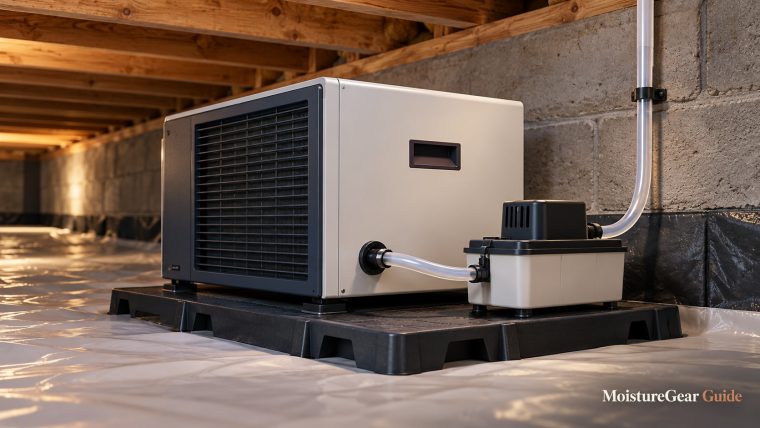
Best Crawl-Space Dehumidifiers with a Pump
Choose pumped drainage around the discharge route and service plan, then compare compact and higher-capacity equipment at consistent conditions.
Read the guide : Best Crawl-Space Dehumidifiers with a Pump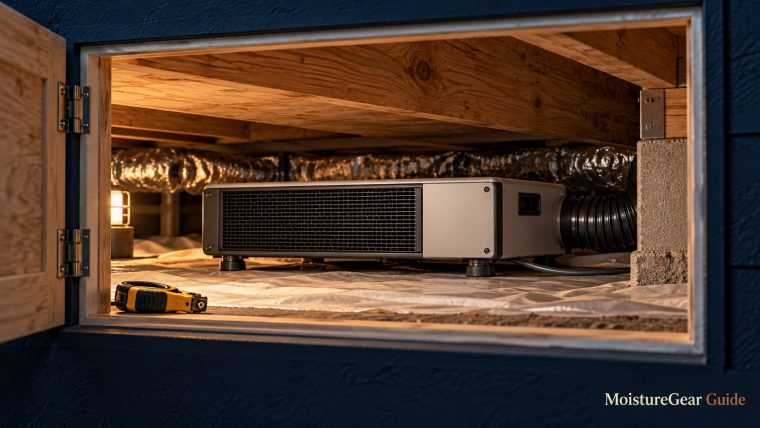
Best Low-Profile Crawl-Space Dehumidifiers for Tight Access
Shortlist low cabinets, then measure the complete installation so the unit can enter, drain properly, circulate air, and remain accessible.
Read the guide : Best Low-Profile Crawl-Space Dehumidifiers for Tight Access
AlorAir Sentinel HD55 Review: Published Specs and Buying Considerations
The blue HD55 suits a compact gravity-drain plan when the assessed load fits. Check exact-model capacity, access, drainage, and support before buying.
Read the guide : AlorAir Sentinel HD55 Review: Published Specs and Buying Considerations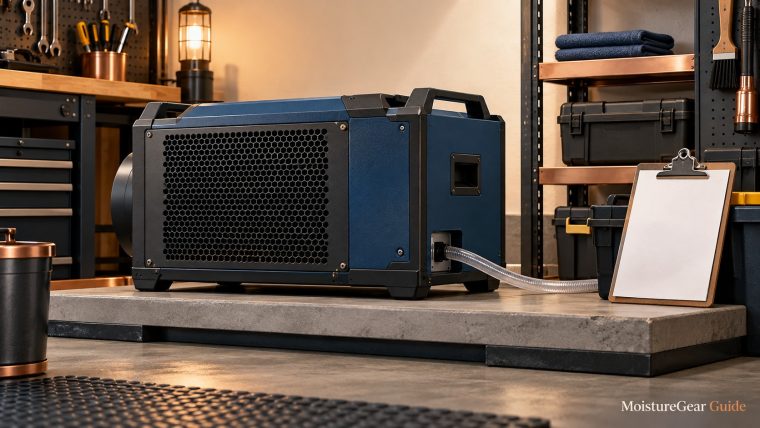
AlorAir Sentinel HDi90 Review: Capacity, Pump, and Ownership Costs
The base HDi90 combines higher published extraction with integral pumping. Evaluate the actual moisture demand, discharge route, access, and support together.
Read the guide : AlorAir Sentinel HDi90 Review: Capacity, Pump, and Ownership Costs
AlorAir HD55 vs HDi90: Which Suits Your Crawl Space?
Choose the blue HD55 for a suitable compact gravity plan or investigate the HDi90 when higher assessed demand and pumped drainage justify its larger cabinet.
Read the guide : AlorAir HD55 vs HDi90: Which Suits Your Crawl Space?Planning and practical guides
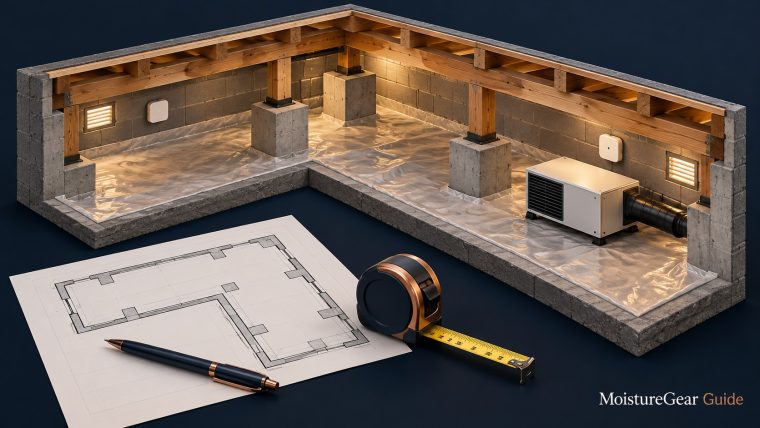
What Size Dehumidifier Does Your Crawl Space Need?
Collect the site details that make a sizing recommendation useful, and avoid comparing incompatible pint ratings or relying on floor area alone.
Read the guide : What Size Dehumidifier Does Your Crawl Space Need?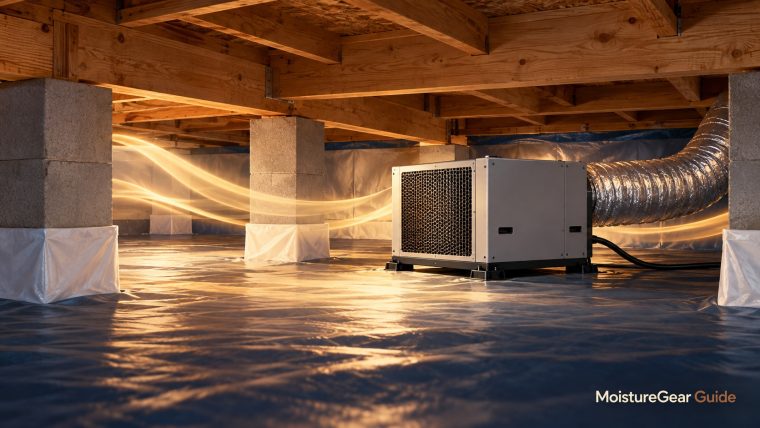
Where to Place a Crawl-Space Dehumidifier
Choose an accessible position with a clear air path and workable drain, then verify humidity control beyond the area immediately beside the unit.
Read the guide : Where to Place a Crawl-Space Dehumidifier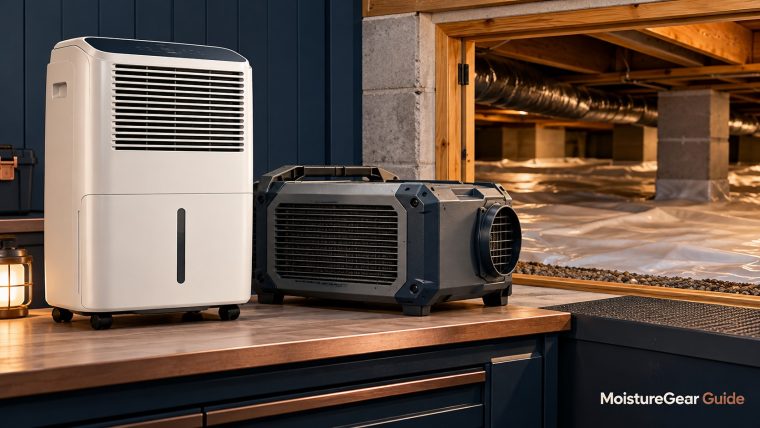
Can You Use a Regular Dehumidifier in a Crawl Space?
A room unit may suit a protected, accessible crawl space when its instructions permit the conditions. Drainage and maintenance often decide the practical choice.
Read the guide : Can You Use a Regular Dehumidifier in a Crawl Space?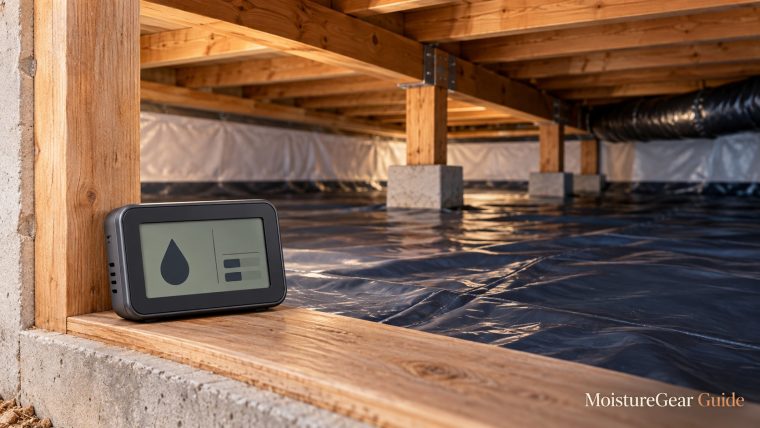
Crawl-Space Humidity: Targets, Measurement, and Seasonal Changes
Use a humidity target alongside temperature, representative sensor readings, and source inspection. One percentage cannot describe every crawl-space condition.
Read the guide : Crawl-Space Humidity: Targets, Measurement, and Seasonal ChangesConnect this topic to the rest of your setup
Equipment selection, drainage, monitoring, and ownership are linked decisions. Follow a related topic when it answers the next question in your plan.
Crawl space
Low-profile equipment, access, moisture loads, and drainage.
Explore the guidesBasement
Portable and permanent options for finished and unfinished rooms.
Explore the guidesWhole house
Capacity, ducting, installed costs, and model comparisons.
Explore the guidesCommercial & restoration
Commercial equipment, LGR technology, and jobsite requirements.
Explore the guidesSizing & ownership
Rating conditions, electricity costs, monitoring, and maintenance.
Explore the guides